


U.S.S. RELIANT NCC-1864
- Thread starter Rhaven Blaack
- Start date
You are using an out of date browser. It may not display this or other websites correctly.
You should upgrade or use an alternative browser.
You should upgrade or use an alternative browser.


Thank you sir!Well, your building skill is definitely "reliant..."
Here are a couple of components that I forgot to attach to the underside of the "engineering" section.
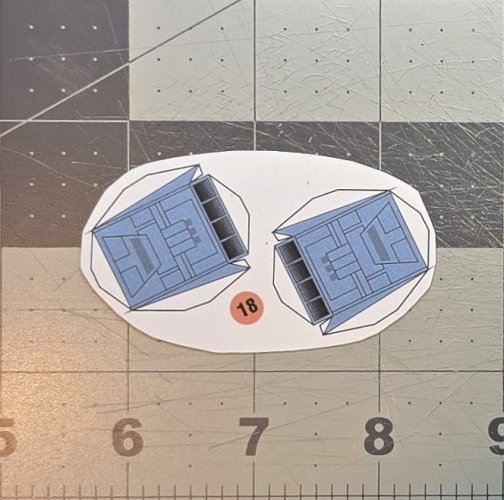
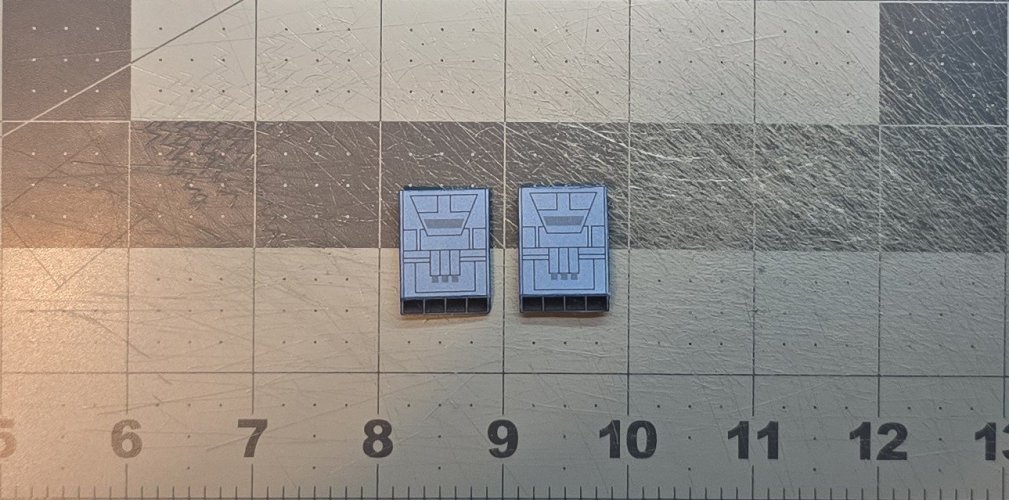
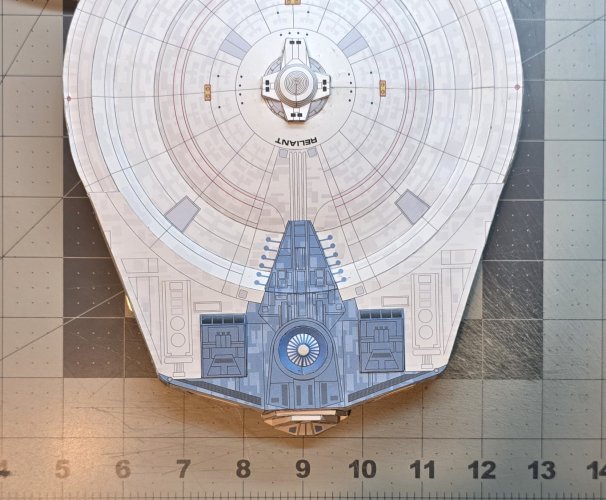
Please stay tune to your local "GLOBAL NETWORK BROADCASTING SYSTEM" for the latest updates on this project!
Please stay tune to your local "GLOBAL NETWORK BROADCASTING SYSTEM" for the latest updates on this project!


Moving on to the support pylons.
These are the mounts for the support pylons.
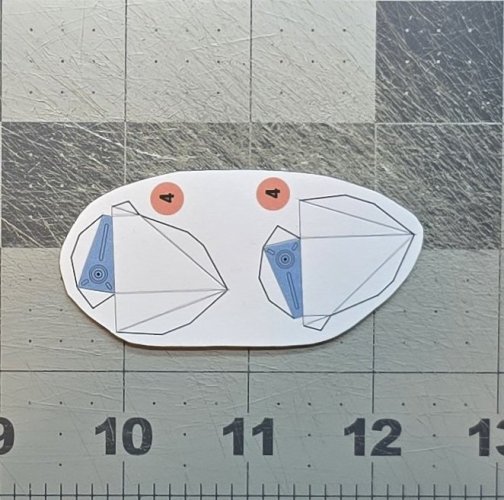
The mounts are assembled.
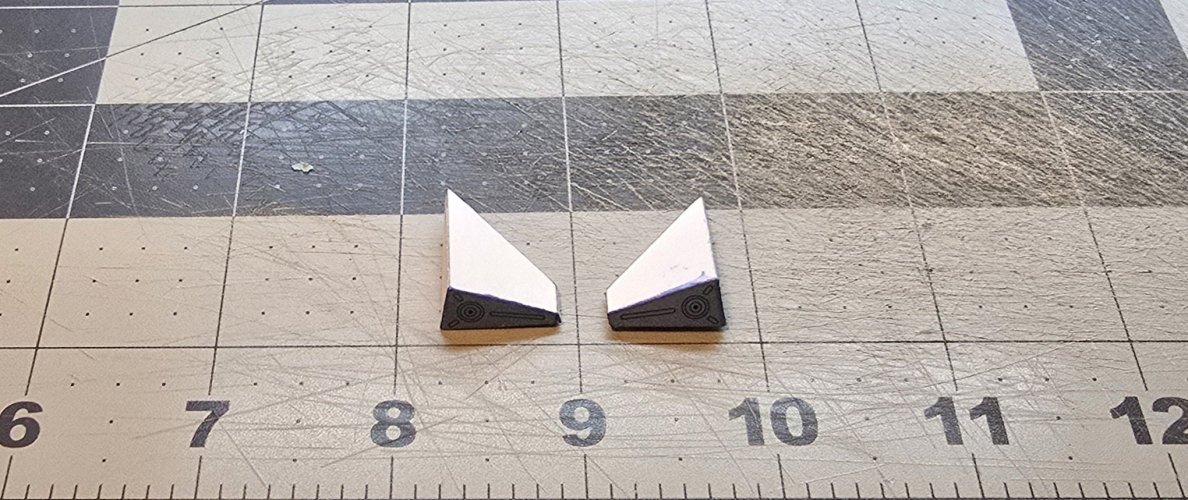
The mounts are attacheched in place.
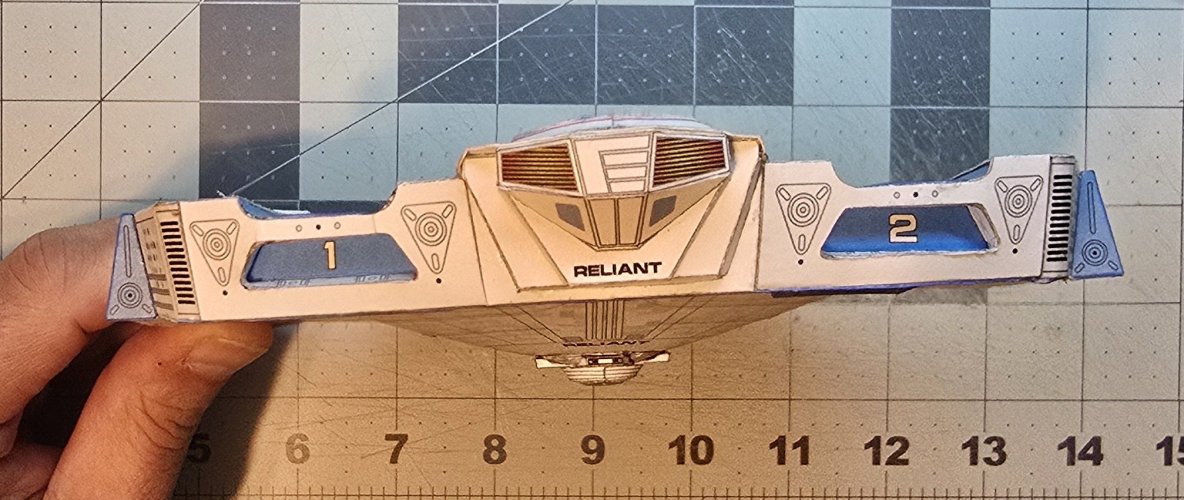
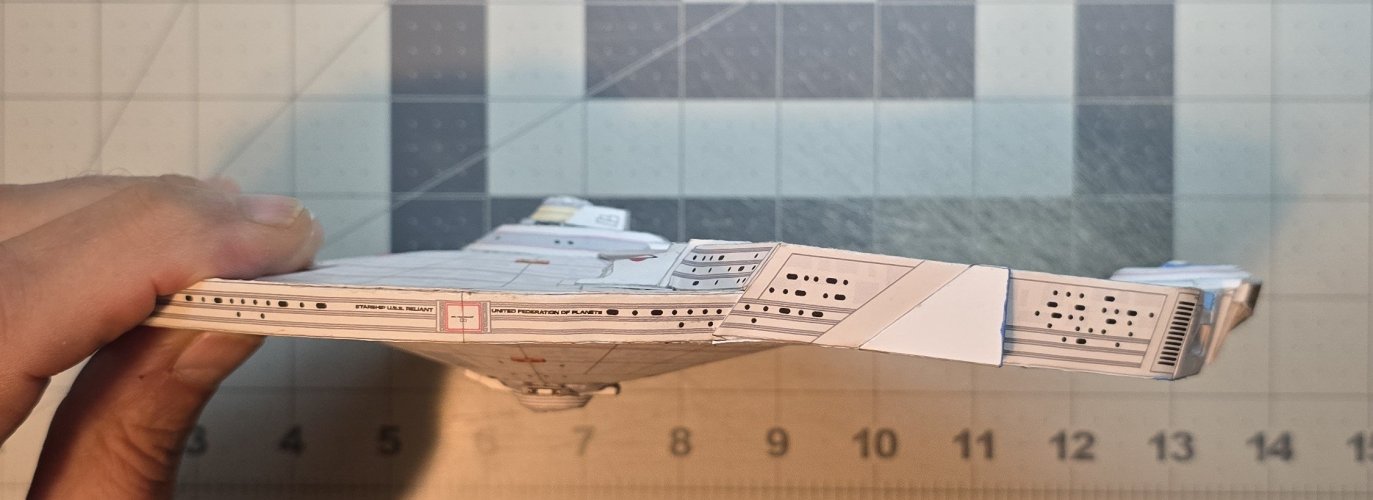
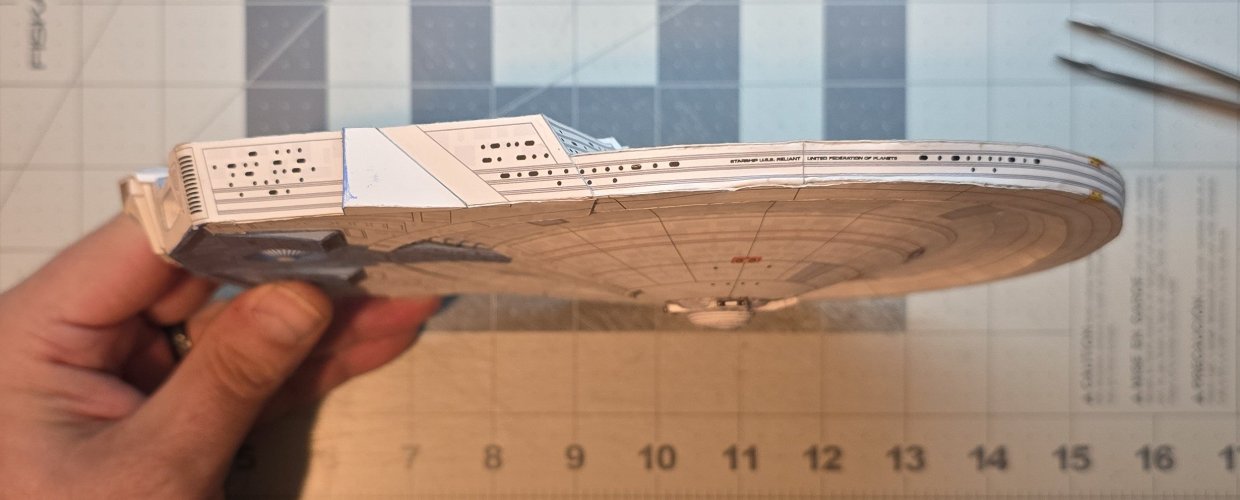
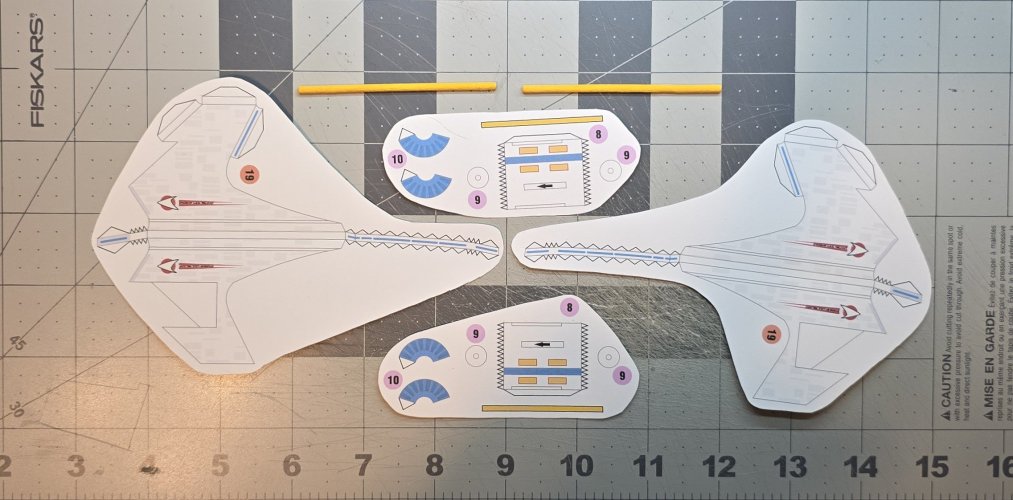
Here are the parts for the support pylons and large phaser cannons.
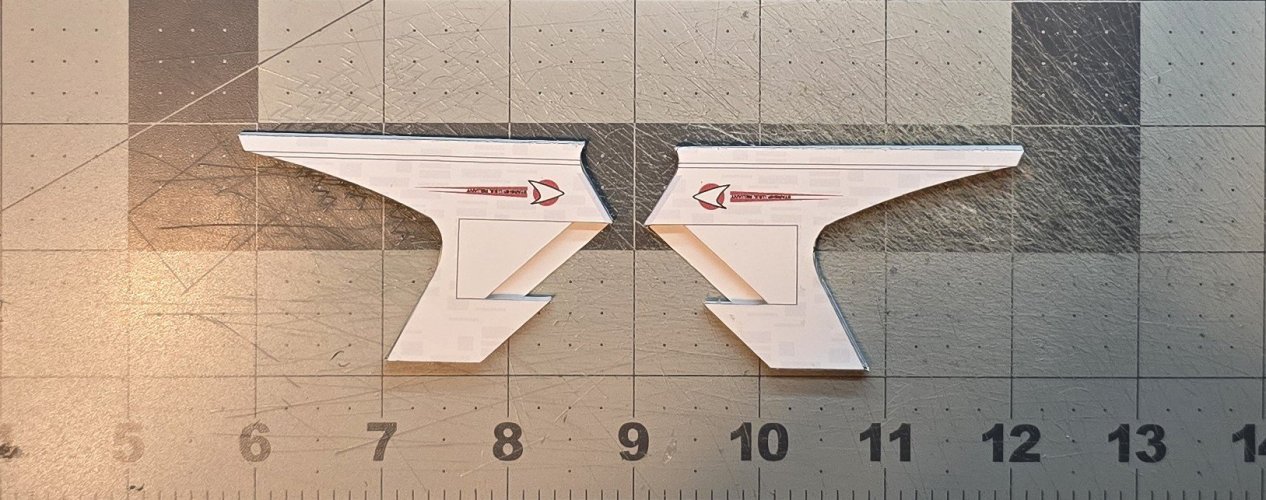
The support pylons are assembled.
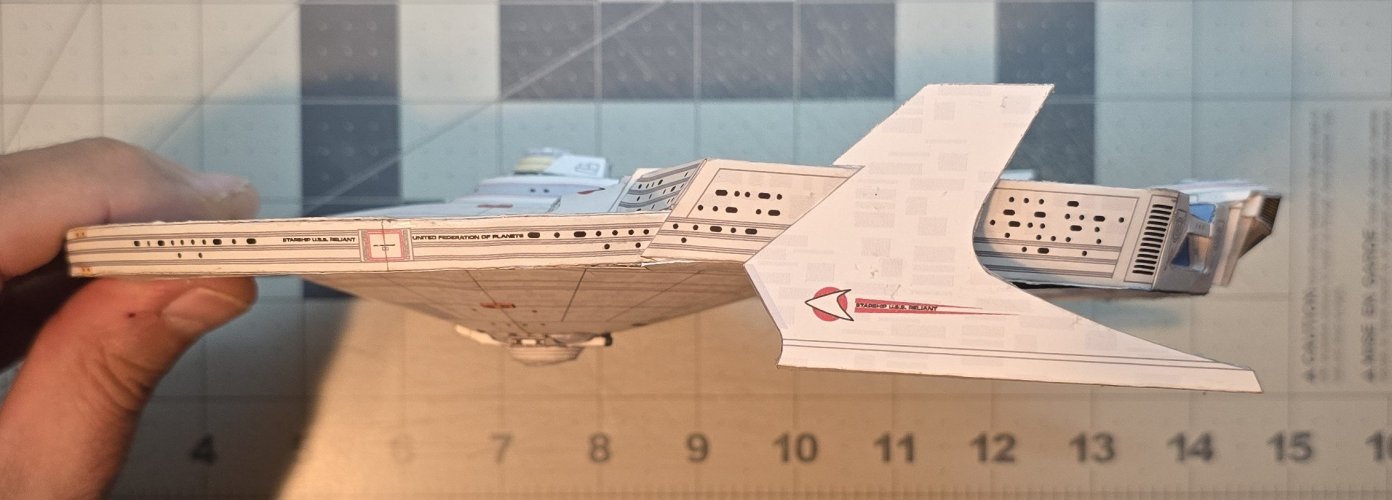
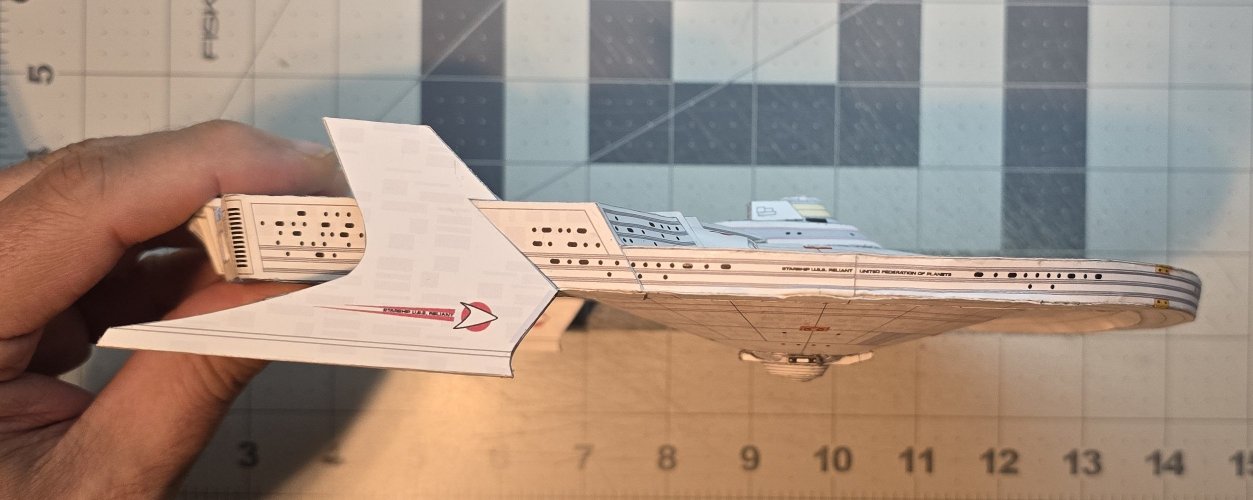
The support pylons are attached.
Please stay tune to your local "GLOBAL NETWORK BROADCASTING SYSTEM" for the latest updates on this project!
These are the mounts for the support pylons.
The mounts are assembled.
The mounts are attacheched in place.
Here are the parts for the support pylons and large phaser cannons.
The support pylons are assembled.
The support pylons are attached.
Please stay tune to your local "GLOBAL NETWORK BROADCASTING SYSTEM" for the latest updates on this project!

Very envious of the clean build!! You didn't even snip the tabs, excellent building skills!!!
Thank you sir.Very envious of the clean build!! You didn't even snip the tabs, excellent building skills!!!
Too right you are. I did not snip the glue tabs.
I have a very simple "cardinal rule" when it comes to building models. That rule states that when I am building a model for the very first time, I build it "AS-IS". That means that I do not alter, augment, or enhance the model in any way shape or form (to include but not limited to adding greebling, snipping the tabs, or anything else). This helps me to ensure that I understand the template and how all of the parts go together, as well as to see how I can add enhancements, augmentation, and greebling, for the next time that I will build the model. Following this "cardinal rule" has helped me improve my building abilities and develop new skills and techniques to improve the models that I build.
Moving on to the rollbars and weapons systems.
Assembling the large phaser cannons.
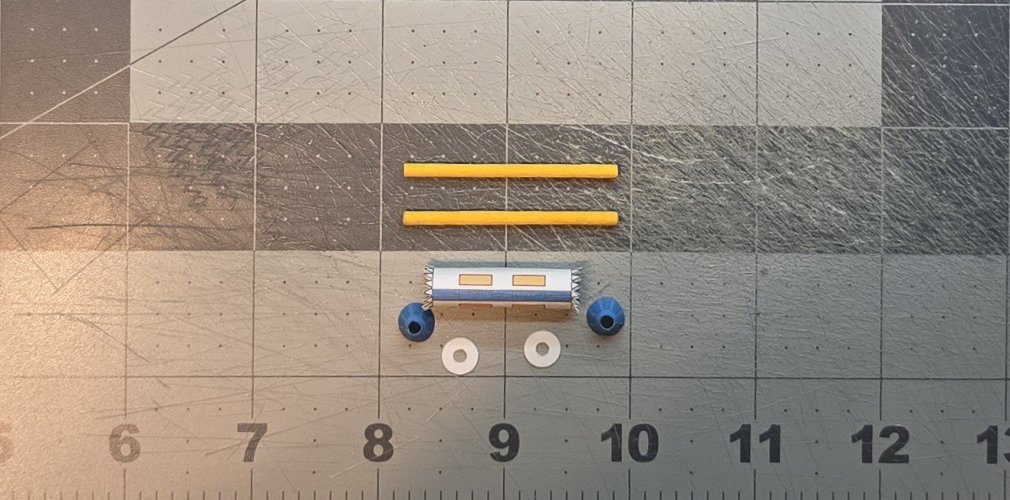
The large phaser cannons are assembled.
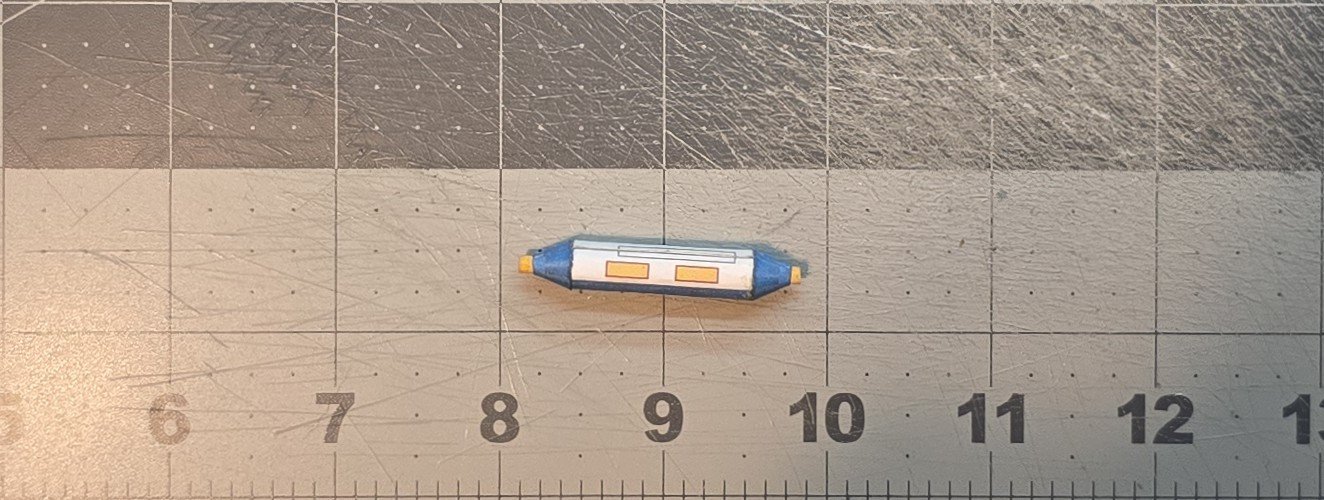
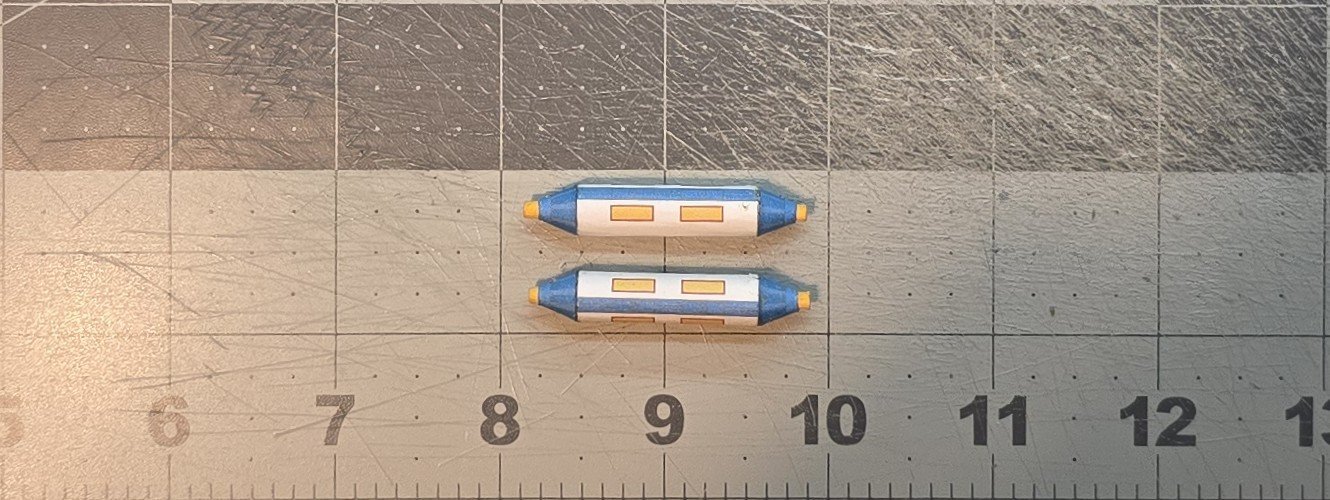
Here are the parts for the rollbars and weapons pod.
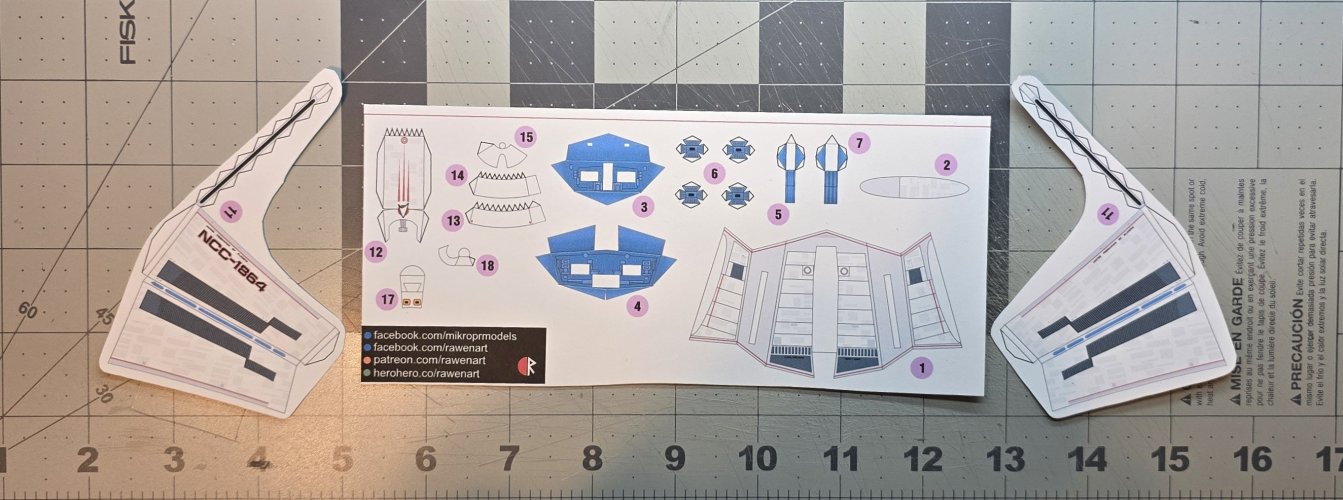
The rollbars are assembled.
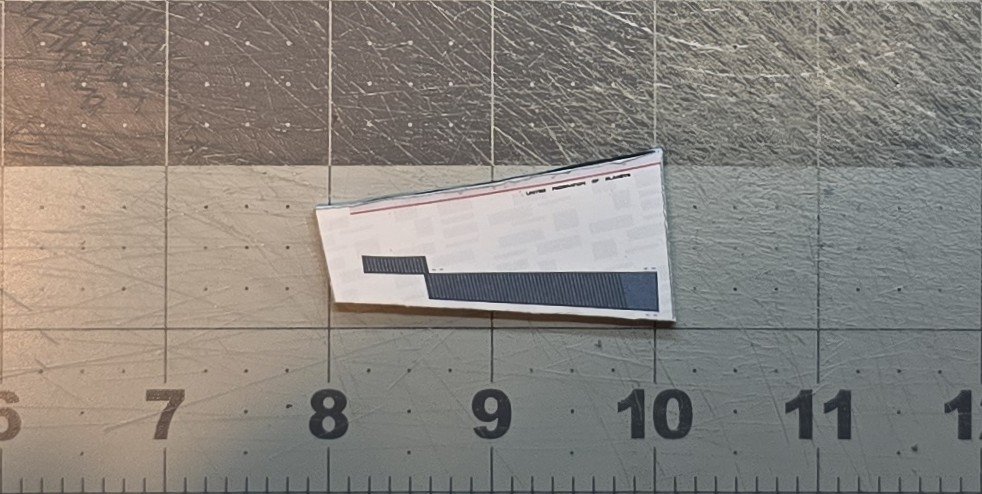
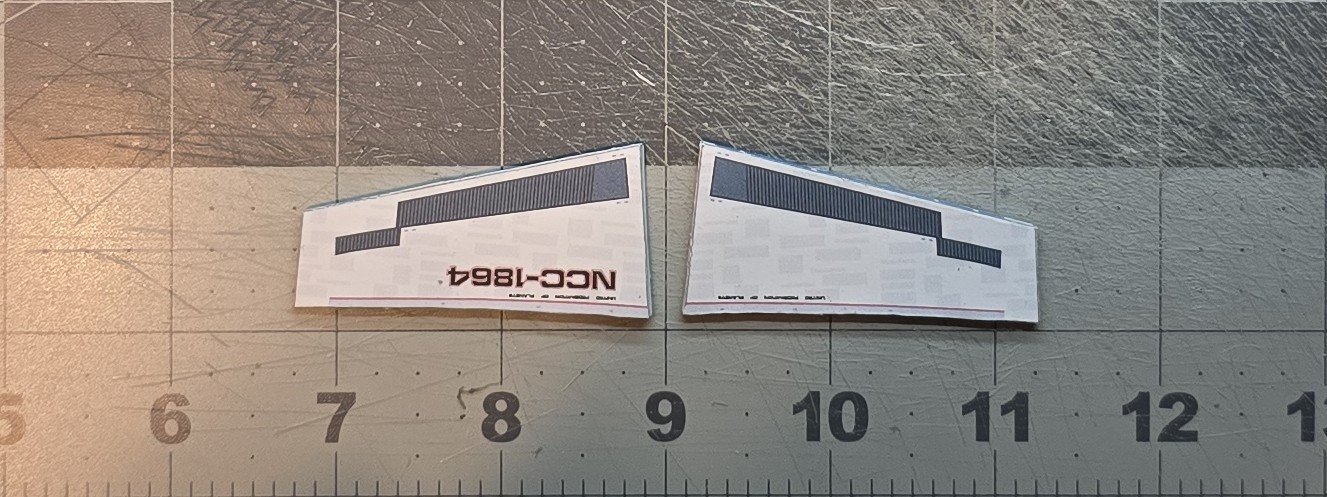
Assembling the weapons pod.
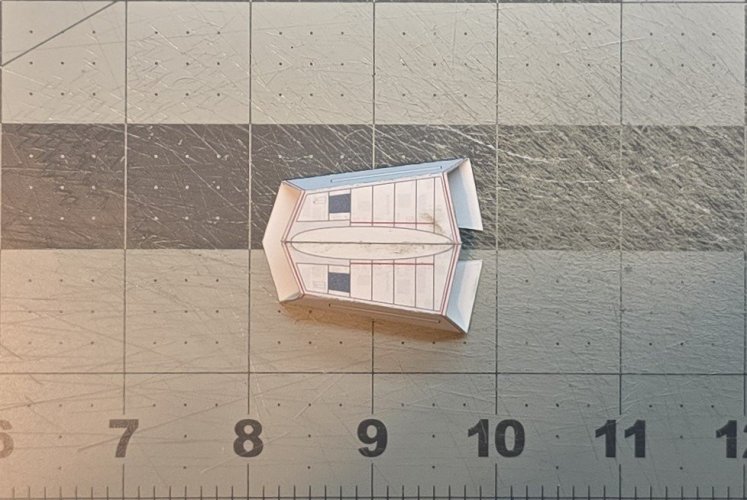
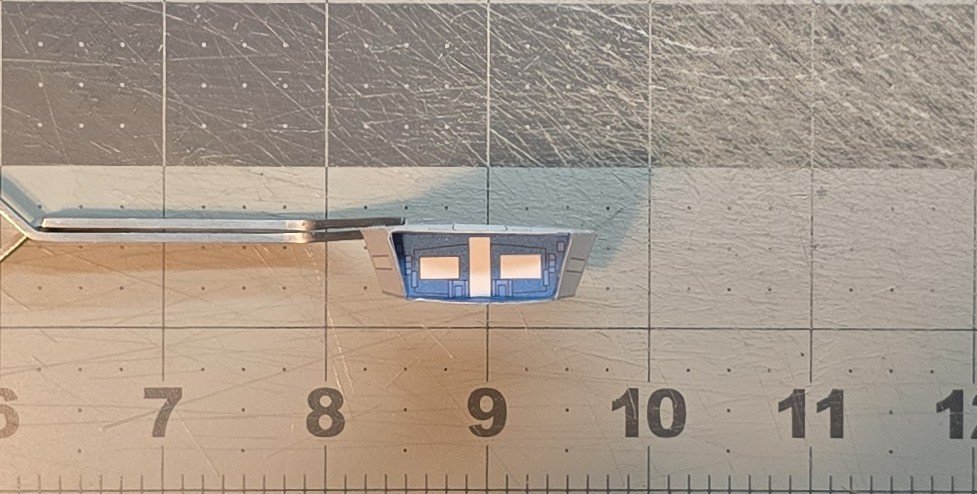
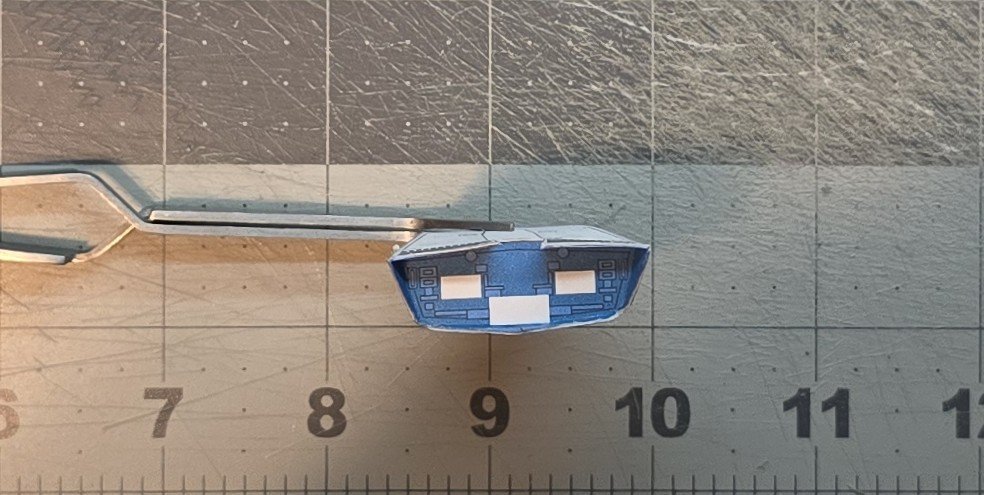
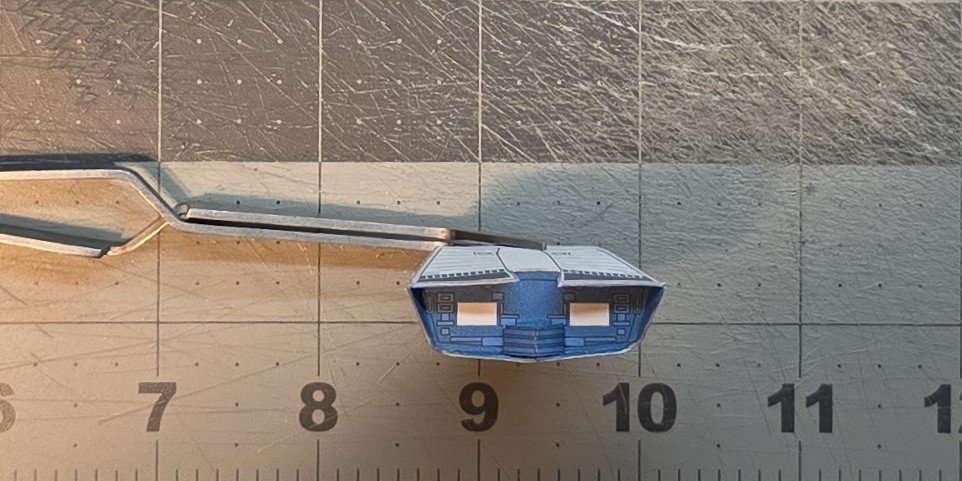
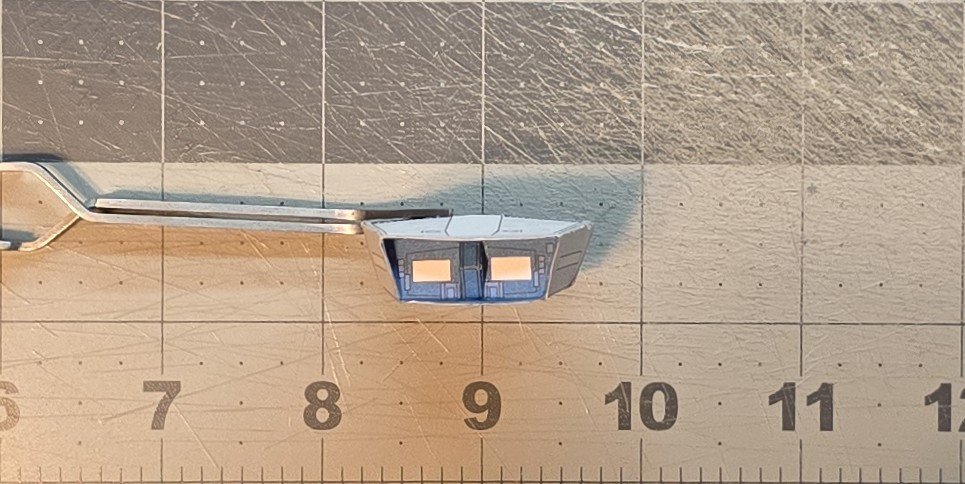
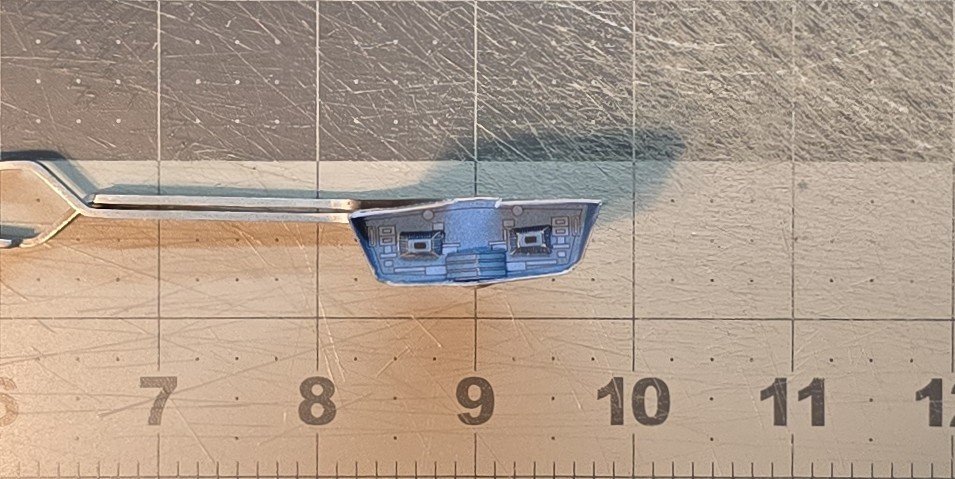
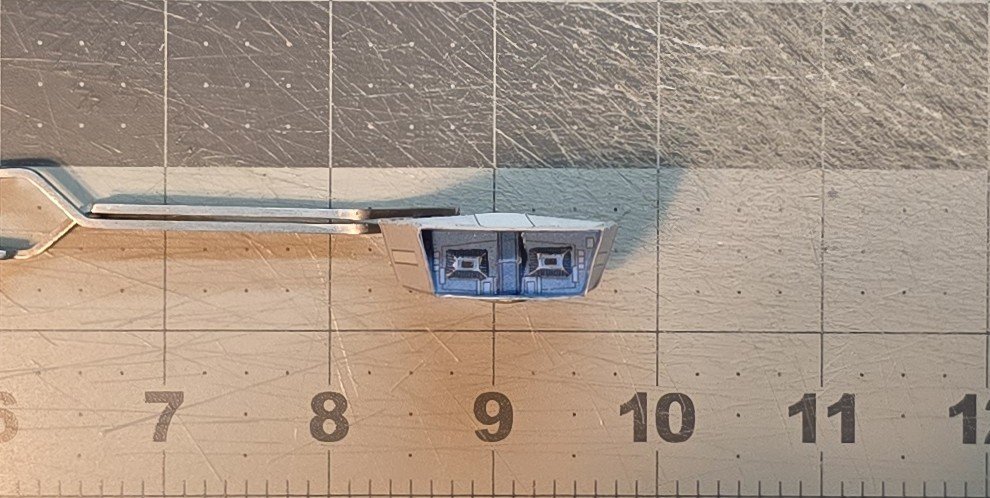
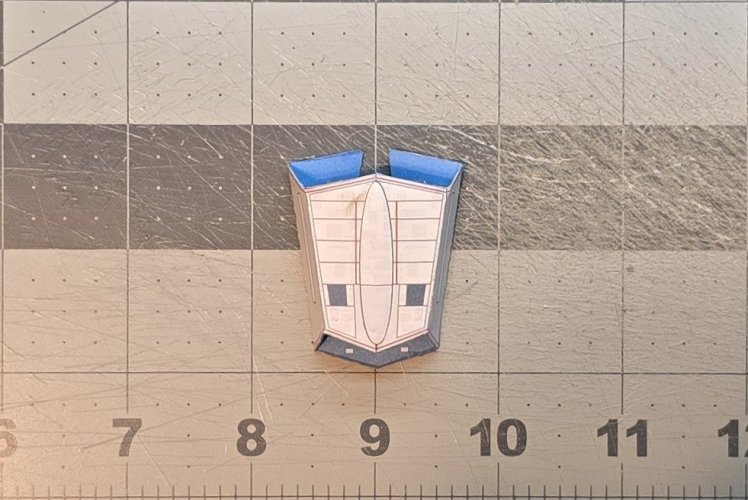
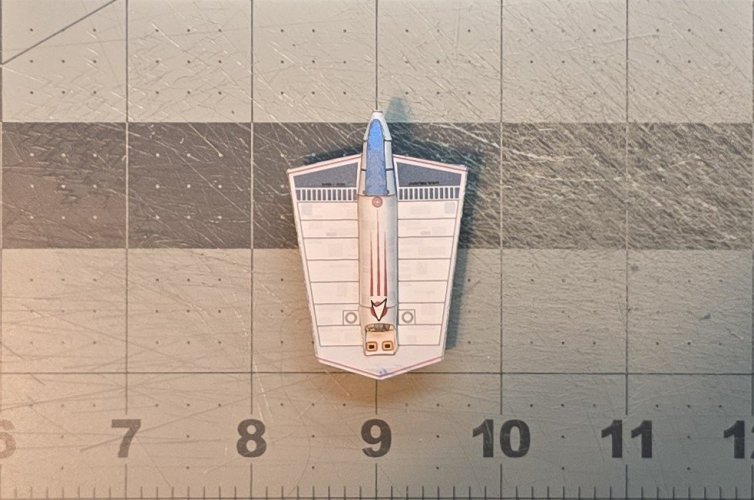
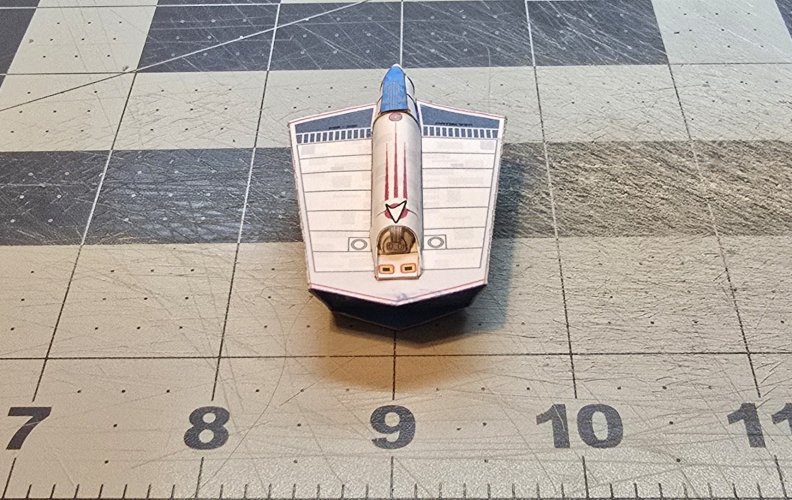
I attached the rollbars to both the large phaser cannons and weapons pod.
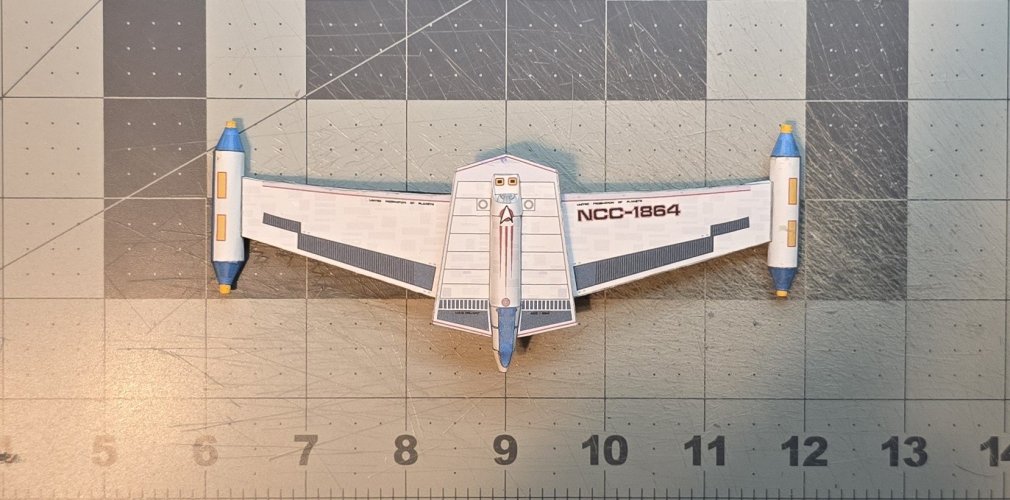
I attached the large phaser cannons to the vertical support pylons.
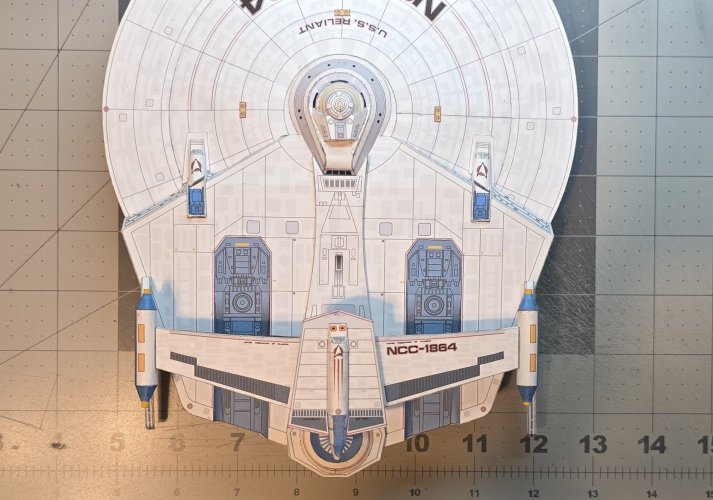
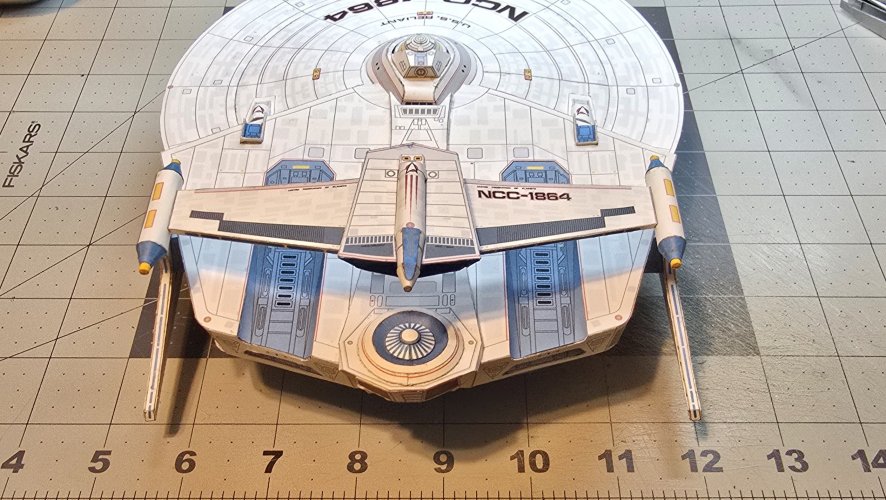
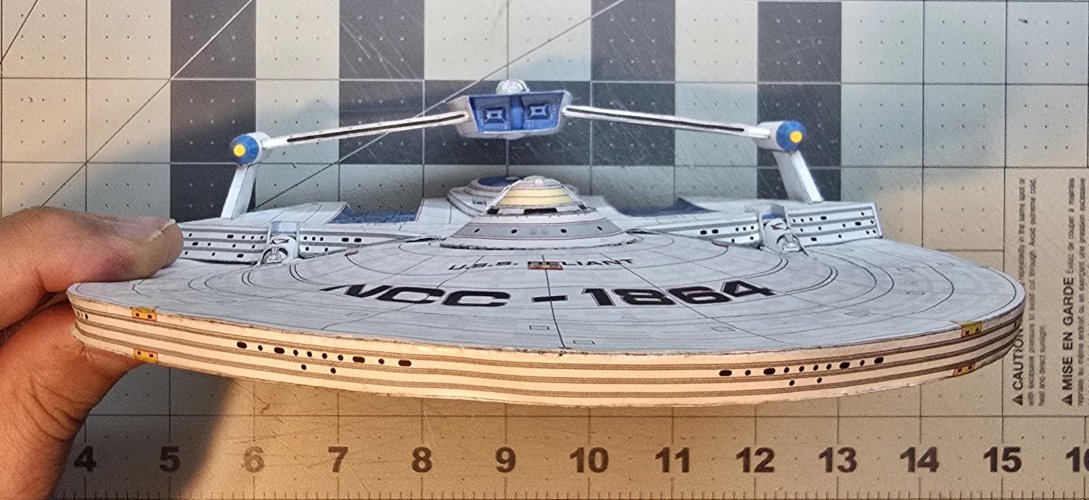
Please stay tune to your local "GLOBAL NETWORK BROADCASTING SYSTEM" for the latest updates on this project!
Assembling the large phaser cannons.
The large phaser cannons are assembled.
Here are the parts for the rollbars and weapons pod.
The rollbars are assembled.
Assembling the weapons pod.
I attached the rollbars to both the large phaser cannons and weapons pod.
I attached the large phaser cannons to the vertical support pylons.
Please stay tune to your local "GLOBAL NETWORK BROADCASTING SYSTEM" for the latest updates on this project!

Thank you sir. There is a GREAT deal of greebling potential in this model. I have been refraining myself from greebling it out (because this is the first time that I have built it).Sweeeettt I see a lot of small details that awesome.

- Apr 5, 2013
- 14,383
- 11,020
I have yet to see once of these ships with perfect (relatively speaking) saucer section seams. I think it's the nature of the model. I have a next generation Enterprise, it's huge, made of plastic, and the saucer section seams were off on that too. Maybe different heat from different mold times, I don't know. I think if the inside section of the edge is doubled up, and the inner section is one thickness smaller than the side, it may lead to the journey of seams.
I recently 3D printed 2 F-22 models from different people. Both got the jet intakes wrong, and gluing sections meant holding the model in my hands, tweaking it while it dried to finally get a ho-hum fit. Some sanding, filler, those models took about 5 hrs. each to print. Talk about let down. The models I get off the web from "Thingverse" and "Makerworld" aren't very good so far. They're are O.K., but will take much work to paint and detail, as they are all one color..
Making things require due diligence, and sometimes the nature of the beast just comes up to bite you in the A$$. It's good that we enjoy doing this, and that in the end, the sum of the parts make for a great model. This model, if I didn't know better, I would think was greebled, I can imagine, if you do it again and greeble it, how much more intense it would be. This is my favorite Star Trek star ship. Great job.
I recently 3D printed 2 F-22 models from different people. Both got the jet intakes wrong, and gluing sections meant holding the model in my hands, tweaking it while it dried to finally get a ho-hum fit. Some sanding, filler, those models took about 5 hrs. each to print. Talk about let down. The models I get off the web from "Thingverse" and "Makerworld" aren't very good so far. They're are O.K., but will take much work to paint and detail, as they are all one color..
Making things require due diligence, and sometimes the nature of the beast just comes up to bite you in the A$$. It's good that we enjoy doing this, and that in the end, the sum of the parts make for a great model. This model, if I didn't know better, I would think was greebled, I can imagine, if you do it again and greeble it, how much more intense it would be. This is my favorite Star Trek star ship. Great job.
You do make very valid points. I do think that the saucer section could be redesigned (and better internal formers could be added, as well as a few other upgrades). However, I have to say that all-in-all, it is a good template and an enjoyable build.I have yet to see once of these ships with perfect (relatively speaking) saucer section seams. I think it's the nature of the model. I have a next generation Enterprise, it's huge, made of plastic, and the saucer section seams were off on that too. Maybe different heat from different mold times, I don't know. I think if the inside section of the edge is doubled up, and the inner section is one thickness smaller than the side, it may lead to the journey of seams.
I recently 3D printed 2 F-22 models from different people. Both got the jet intakes wrong, and gluing sections meant holding the model in my hands, tweaking it while it dried to finally get a ho-hum fit. Some sanding, filler, those models took about 5 hrs. each to print. Talk about let down. The models I get off the web from "Thingverse" and "Makerworld" aren't very good so far. They're are O.K., but will take much work to paint and detail, as they are all one color..
Making things require due diligence, and sometimes the nature of the beast just comes up to bite you in the A$$. It's good that we enjoy doing this, and that in the end, the sum of the parts make for a great model. This model, if I didn't know better, I would think was greebled, I can imagine, if you do it again and greeble it, how much more intense it would be. This is my favorite Star Trek star ship. Great job.
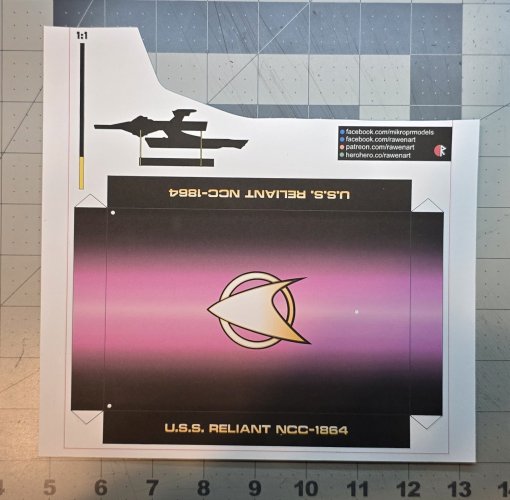
Time for the display stand.
Here are the part(s) for the stand.
*NOTE* You will need either three Q-tip stems, three equal lengths of bamboo skewer or some other material for the "upright" supports (use the guide on the page for reference.).
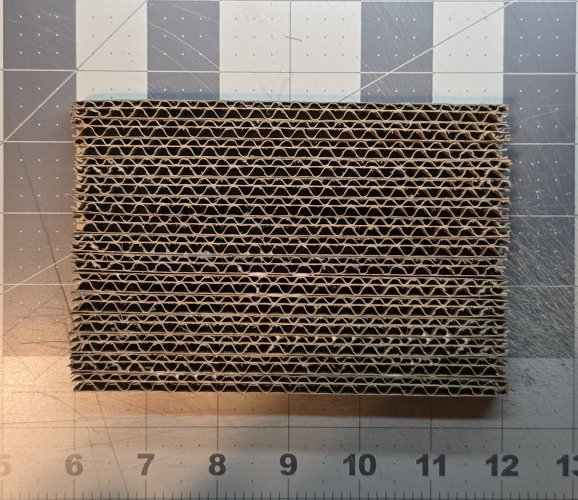
I cut sections of corrugated cardboard. I ran the corrugation vertically.
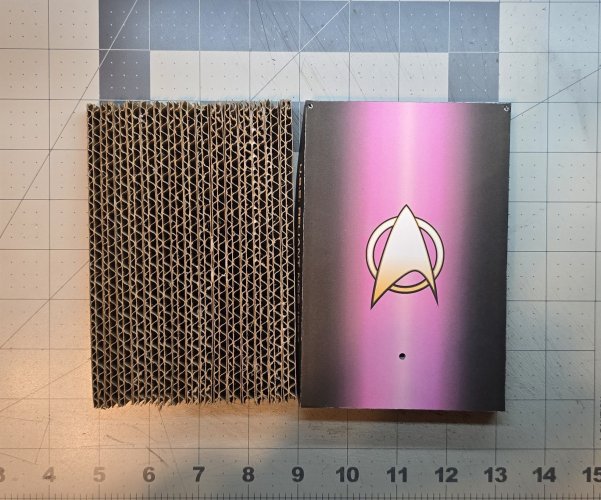
I placed the corrugated cardboard inside the skin of the base.
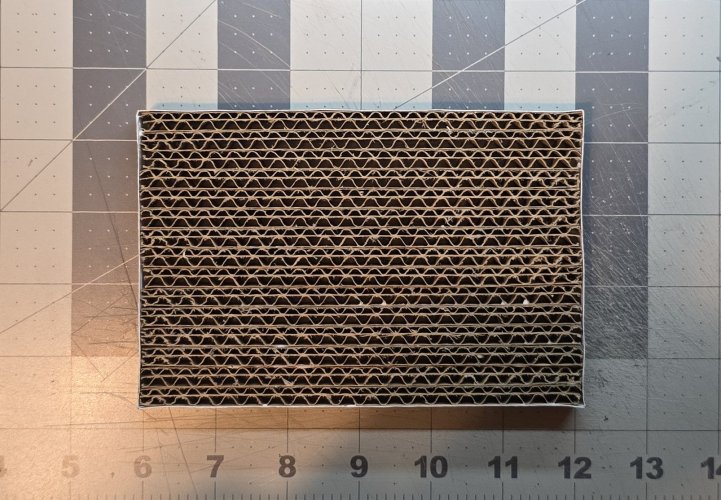
Here are the base and the uprights. I chose to use bamboo skewers (painted black).
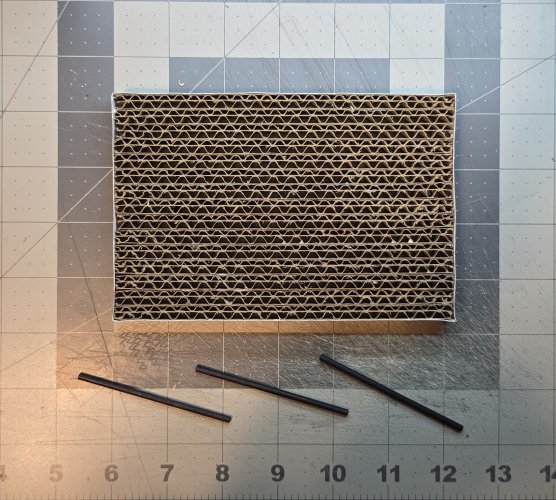
I poked the skewers through the base and into the corrugated cardboard.
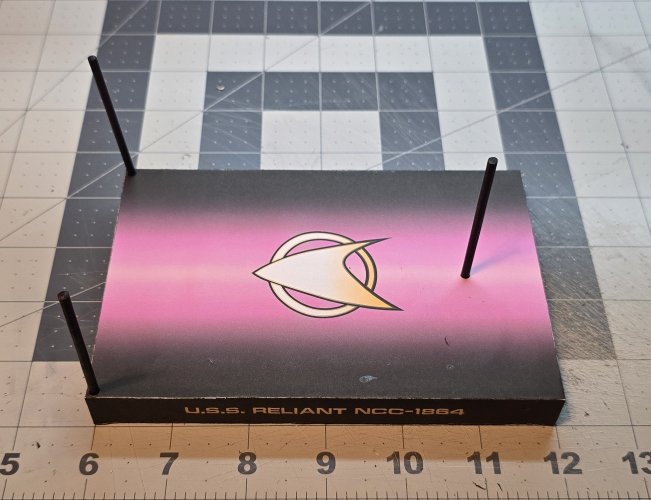
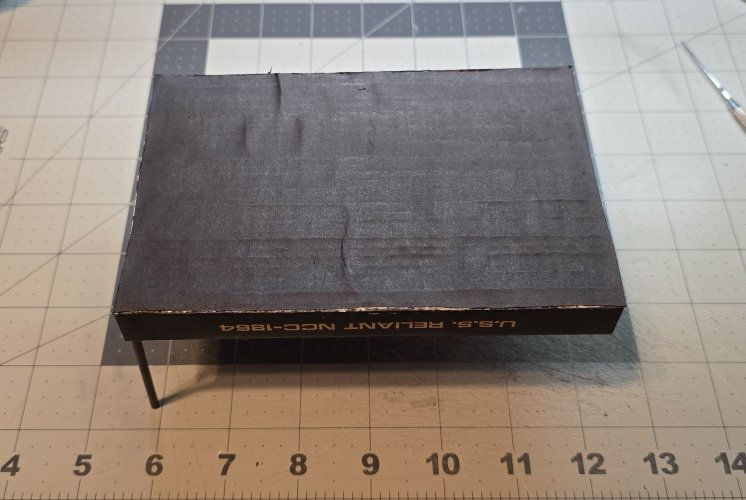
I sealed the bottom of the base with a sheet of cardstock.
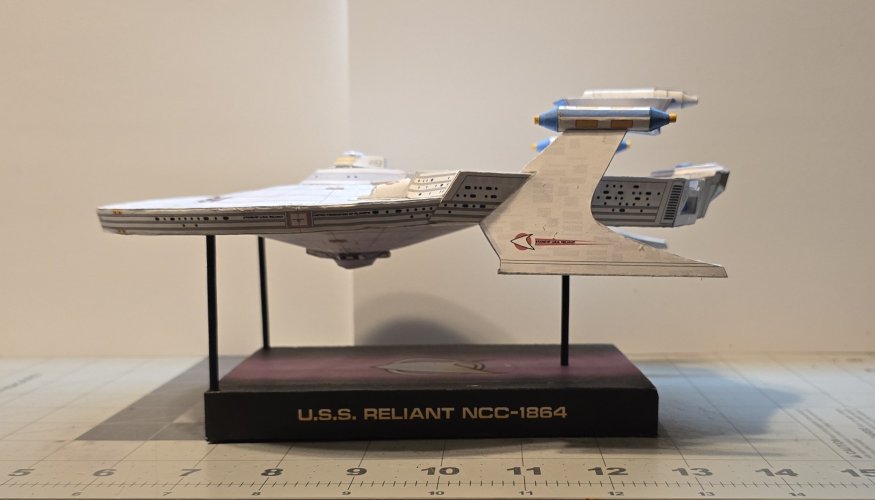
The display stand is finished.
Please stay tune to your local "GLOBAL NETWORK BROADCASTING SYSTEM" for the latest updates on this project!
Here are the part(s) for the stand.
*NOTE* You will need either three Q-tip stems, three equal lengths of bamboo skewer or some other material for the "upright" supports (use the guide on the page for reference.).
I cut sections of corrugated cardboard. I ran the corrugation vertically.
I placed the corrugated cardboard inside the skin of the base.
Here are the base and the uprights. I chose to use bamboo skewers (painted black).
I poked the skewers through the base and into the corrugated cardboard.
I sealed the bottom of the base with a sheet of cardstock.
The display stand is finished.
Please stay tune to your local "GLOBAL NETWORK BROADCASTING SYSTEM" for the latest updates on this project!
Absolutely a pleasure to see you build on this! (And all the others too!)
Thank you sir!Absolutely a pleasure to see you build on this! (And all the others too!)
Excellent work!When I first started (scratch) building models, the very first Starfleet starship that I built was the U.S.S RELIANT. So when a template of the Reliant became available (and yes, there are a few different ones available), I (very quickly) downloaded the one that was designed by @Rawen. I have been wanting to build this model for quite some time.
View attachment 231630
*NOTE* Granted, this template has a great deal of greebling potential. However, since this is the first time that I am building this model, I will be building this model "AS-IS" (no greebling).
There are 10 sheets of parts in A-4 format. I originally printed the template on letter format cardstock. Unfortunately, I was not able to have everything printed properly. So, I printed the template at 95%.
Here are the parts sheets.
View attachment 231621
I started with the top skins of the saucer section.
View attachment 231622
*NOTE* Whilst working o the saucer section, it is needed to add glue strips to connect some of the parts.
View attachment 231623
View attachment 231624
*NOTE* When assembling the skin, the builder need to pay close attention to the printed textures and make certain that all of the lines are mated up properly.
View attachment 231625
View attachment 231626
The top skin for the saucer is assembled.
View attachment 231627
I added more strips to reinforced the center piece of the skin and I attached the edge ring.
View attachment 231628
The template requests that the builder laminates a disc (that is included with the template) to 4mm-5mm.
I attached the disc in place.
View attachment 231629
Please stay tune to your local "GLOBAL NETWORK BROADCASTING SYSTEM" for the latest updates on this project!
- Apr 5, 2013
- 14,383
- 11,020
Superb job. Having seen YOU build it now shows it's weak points, and gives me ideas where the model could be improved. This will make a great display piece, and is one bad ass looking ship!! 